How We Enhanced Alvys EDI, and Where It Stands Now

The short version:
- Alvys EDI is native. The EDI engine lives inside the TMS, so you can accept and reject tenders in the TMS, and loads are automatically updated. No second platform = less friction. When you need help, you don't need to coordinate with an additional party, you can just talk to Alvys.
- Alvys is averaging more than 2 million successful EDI transactions each month, including inbound and outbound.
- 99.3% of EDI files Alvys sends are accepted by the receiver.
- Alvys EDI go-lives increased in speed by 10X.
- Alvys EDI onboarding takes weeks, not months, and sometimes just days. Our side takes days. Full go-live averages about 25 days because of trading partner testing. The industry norm for all of this work is 3 to 6 months.
- Yes, Alvys EDI used to be slower. We rebuilt it. This post covers what changed.
Before we go back in time, check out this current testimonial from one of our customers:
"With the native EDI feature, our customers have access to our loads. They can see where our trucks are, and they get updates immediately as soon as the load is picked up and then when it's delivered. They get access to all of our invoices immediately, so less process is needed from pickup to delivery. The biggest help with native EDI is that our tracking team's workflow is reduced by probably 50%. It saves our dispatching team and accounting team a lot of time. All the things we did manually before, we now do automatically through Alvys EDI."
— Filip Rakovski, COO of MDN Freight
Watch MDN's full testimonial
Was Alvys EDI bad before?
It worked well, but it wasn't available at scale to all customers. Every mapping change used to run through engineering. A customer request became a ticket. A developer picked it up in a sprint, built it, tested it, deployed it. Good work, but hard to scale.
That pace held up with a few trading partners at a time. Then a lot of shippers came on at once. Onboarding slowed. We felt it. Some customers felt it too.
So we moved mapping configuration out of engineering and into our EDI team's hands. They make the change in a config screen and save it. Same day, not next sprint.
Then we opened the box. Every file you send and receive sits on one page, with delivery and acknowledgment status. Failed files retry on their own. Your team can retrigger any of them.
More speed. Full transparency.
Why is EDI a black box at most vendors?
Ask a carrier how their EDI works. Most cannot tell you.
That is not a knock on carriers. That is the business model. Most major EDI providers sell EDI as a service, and the service depends on you not understanding it. You do not know how it works. They know how it works. Pay them and they will handle it.
So carriers stop asking. Files go out. Files come back. Something breaks and nobody in the building can say why.
I have worked on both sides of that wall. I spent five years building EDI products before I came to Alvys. I came here to tear the wall down.
What was the bottleneck?
Engineering. Same bottleneck most of the industry still has. A customer emails in a mapping request. Support opens a ticket. The ticket becomes an engineering ticket. A developer picks it up in the next sprint. Testing follows. Roughly a month later, the mapping change ships.
That flow works. It just does not scale. It caps you at a handful of go-lives per month. We had two choices. Hire more developers. Or stop needing them.
How did we make EDI faster? EDI managers got the keys
We built a configuration UI and put our EDI managers in it.
No engineering ticket. No development cycle. An EDI manager opens the config, makes the mapping change, clicks save. Done.
That one decision moved the numbers more than anything else we did.
Go-lives went 10x faster. Setup time dropped to roughly 25 days on average. Some integrations go live in 3 days on our side.
Why does native EDI matter?
Native means the EDI engine lives inside the TMS instead of beside it. No separate platform needed. EDI lives on the same pages your dispatchers already work in.
What does native EDI make possible?
- A shipper sends a tender. Your dispatcher sees it on the Tenders page. Accept or reject it right there. On accept, the load creates itself in the TMS automatically!
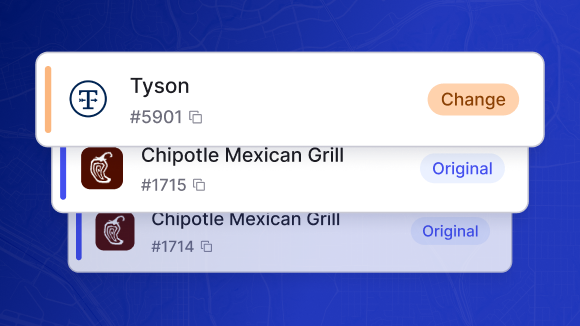
- A shipper sends a change. A button appears on the load detail page that reads "Updates available." Open the side panel. Every proposed change sits there. Accept or reject each one on its own, and the load automatically updates.
- What about exceptions? Say you already talked to the customer by phone. You know the address change they sent is wrong. Accept the acknowledgment. Skip that specific change. Your load stays right and your trading partner stays happy.
Bolted-on EDI cannot do that. It does not know what your load looks like, and cannot update your load automatically. You have to rely on manual entry, which is error prone. This causes errors. Overall the friction from EDI on a separate platform results in lower shipper scorecards over time.
How do you kill a black box?
Show people what is happening.
Alvys TMS has a page that lists every EDI file moving in both directions. Outbound and inbound. Whether the file was delivered. Whether the customer acknowledged it. Failed files retry on their own, and your team can retrigger any file by hand.
Nobody has to trust us on faith anymore. Open the page and look.
Same idea drove controlled sharing. Before your team saves a stop arrival time, we warn them. That time is about to go to your customer. If the time would mark the load late, they see the warning first. One-minute discrepancies stop turning into late-arrival marks.
That is not a feature you can bolt on either. It only works because Alvys’ native EDI engine and the operational data sit in the same platform.
What we still cannot fix
Straight talk on timelines. Our side of an integration can move in days. The full onboarding still takes weeks.
The reason is not us. It is trading-partner testing.
Here is how that goes. We reach out to your customer. The customer refers us to their EDI provider. We exchange EDI requirements and endpoint information. We enter a multi-step test exchange, one file at a time, waiting for approval at each step. Then you go live.
One recent onboarding opened with a 45-minute call just to walk through the testing process. No files exchanged yet. Those email threads can carry 20-plus people on CC.
The industry baseline for full EDI onboarding is months. We average about 25 days. I will not promise you days, because the other side of the connection does not answer to me.
Weeks, sometimes days. That is the honest number.
Where Alvys EDI stands in 2026
Alvys moved more than 2 million EDI transactions in August 2026 alone, both directions.
99.3% of the files we send get accepted by the receiver.
That second number is the one I care about. Big shippers fine carriers for bad EDI. Every rejected file is a chargeback waiting to happen. A 99.3% acceptance rate means your team is not eating penalties for bad data.
Speed went up. Visibility went up. The black box is gone.
Ask your current EDI provider to show you their acceptance rate. See what happens.
One of our customers, Tribe, was recognized as Carrier of the Year by Coca-Cola! We are proud to say their EDI relationship with that shipper runs on Alvys.


One of our customers, Tribe, was recognized as Carrier of the Year by Coca-Cola! We are proud to say their EDI relationship with that shipper runs on Alvys.
See Alvys Native EDI in action. Book a demo here.
Frequently asked questions about Alvys EDI
Is Alvys EDI good?
Alvys EDI processed more than 2 million transactions in August 2026, and 99.3% of files Alvys sends are accepted by the receiver. Customer shippers are happy and scorecards are high. One customer running Alvys native EDI recently received the Carrier of the Year award from Coca Cola. Alvys EDI had some issues around speed in earlier years. But in 2026, mapping configuration moved out of engineering into a config UI, which raised go-lives from 2 to 3 per month to about 35 per month.
Does Alvys have native EDI?
Yes. Alvys EDI is native, meaning the EDI engine runs inside the TMS. There is no separate EDI platform, no second login, and no separate support team. Tenders, change standards, and status updates all appear on the same pages dispatchers already use, and updates to loads are made automatically.
How long does Alvys EDI take to set up?
Alvys averages about 25 days for full EDI onboarding. Some integrations go live in 3 days on the Alvys side. The industry baseline is 3 to 6 months when nothing is automated. The variable is trading-partner testing with the shipper's EDI provider, which Alvys does not control.
What is the difference between native EDI and bolted-on EDI?
Native EDI runs inside the TMS and can see the load. Bolted-on EDI runs on a separate platform and cannot. That difference is why Alvys can warn a dispatcher before an arrival time is sent to a customer. It is also why a dispatcher can accept an EDI acknowledgment while rejecting one change inside it. And accepted EDI tenders can update loads automatically.
Can I see what my EDI is actually doing in Alvys?
Yes. Alvys shows every inbound and outbound EDI file on one page, including whether each file was delivered and acknowledged by the customer. Failed files retry automatically and any file can be retriggered by hand.
What EDI transactions does Alvys support?
- 204 - Motor Carrier Load Tender
- 210 - Motor Carrier Freight Details and Invoice
- 213 - Motor Carrier Shipment Status Inquiry
- 214 - Transportation Carrier Shipment Status Message
- 824 - Application Advice
- 990 - Response to a Load Tender
- 997 - Functional Acknowledgment
About the author
Jochem Visser is Senior Product Manager for EDI and Visibility at Alvys, the AI-powered TMS for freight brokers and carriers. He joined Alvys in December 2024. Before that he spent more than five years building EDI products at Orderful, and started his career on integrations at FarApp, acquired by Oracle NetSuite.